

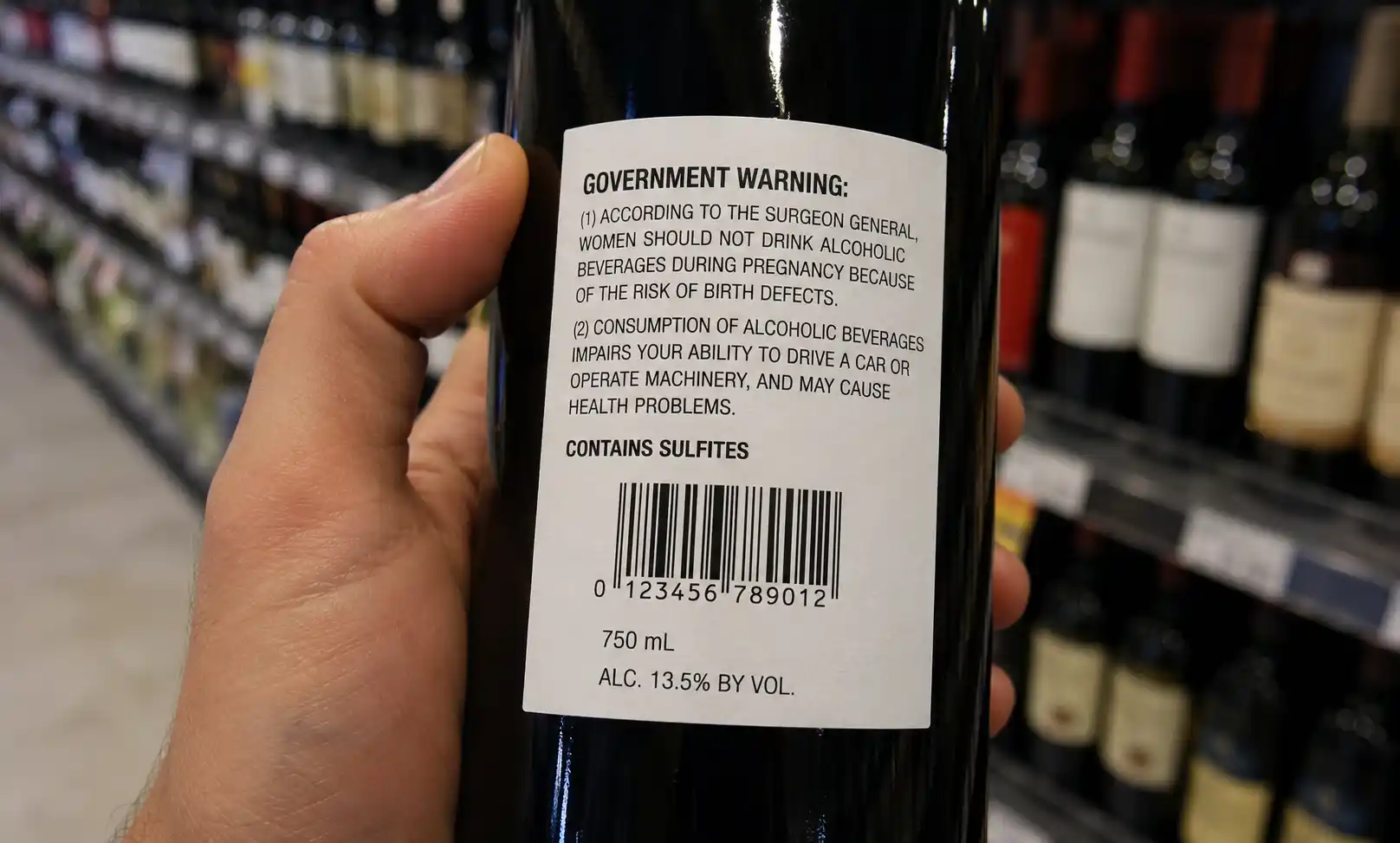
Most people can easily tell you the number of calories in a soda, the amount of sugar in a yogurt, or the quantity of protein in a carton of milk. Still, when you grab a bottle of beer, wine, or whiskey, you might see something quite unexpected: in many cases, there is absolutely no Nutrition Facts label.
This naturally makes one wonder: why doesn't alcohol have nutrition facts?
Since alcoholic beverages have calories, carbohydrates, sugars, and other substances that may impact health, it is hardly understandable for most consumers when they are told that alcohol products have long been subjected to completely different labeling rules than most food and beverage items.
Finding out the reason why alcohol doesn't come with nutrition facts is not just a matter of curiosity. It may affect weight management, calorie counting, blood sugar control, and making well-informed decisions. Whether you aim to shed some pounds, handle a health issue, or just get a better understanding of what you are drinking, knowledge of the way alcohol labeling works will aid you in making wiser choices.
This piece of writing will equip you with knowledge about the changes in regulations that led to the present alcohol labeling, the actual nutrients found in alcoholic beverages, the reasons for divergence in rule-making, the information that the average consumer should be aware of, and the changes in regulations that might bring a new look to alcohol labels.
Key Takeaways
-
There are various regulations on alcohol as a category that separates it from regular food and beverages.
-
In fact, quite a few types of alcoholic beverages do not have to show Nutrition Facts panels by law.
-
Interestingly, alcohol is packed with calories, although it is not technically classified as a nutrient.
-
Roughly, one gram of alcohol is equivalent to 7 calories.
-
With alcohol, some alcoholic drinks also have quite a lot of sugar and carbs in them.
-
The exemptions for labeling have a long history going back to the 20th century and are, first and foremost, regulatory rather than nutrition-based.
-
People usually fail to realize just how many calories they are getting from alcohol.
-
There is a trend that voluntary nutrition labeling on alcohol products is first gaining momentum.
-
Many health professionals are in favor of alcohol labels featuring more information and transparency.
-
Knowing what alcohol content is present in drinks is one step in controlling one's weight and health.
What Are Nutrition Facts Labels?
Nutrition facts labels are standardized screens designed to help consumers understand what is inside food and beverages.
They typically provide information about:
-
Calories
-
Total fat
-
Saturated fat
-
Cholesterol
-
Sodium
-
Carbohydrates
-
Fiber
-
Sugars
-
Protein
-
Vitamins and minerals
The main aim is straightforward - to assist individuals in making knowledgeable food choices.
These labels are compulsory for almost all packaged products. Yet, alcohol qualifies as a special regulatory group that, over time, led to its exclusion from a lot of the usual food-labeling rules.
The Short Answer: Why Doesn't Alcohol Have Nutrition Facts?
The main reason why alcohol does not have Nutrition Facts labels most of the time is that alcoholic beverages are regulated under a different legal setup than regular foods.
In the US, generally, most foods are regulated by the Food and Drug Administration (FDA). Yet, many alcoholic beverages are under the jurisdiction of the Alcohol and Tobacco Tax and Trade Bureau (TTB).
Since alcohol was traditionally regarded as a separate category of product, it has not been covered by the same compulsory nutrition-labeling regulations as most packaged foods.
Put simply, the lack of Nutrition Facts labels is mostly a consequence of the regulatory history and does not mean that alcohol has no calories or nutritional elements.
The History Behind Alcohol Labeling
To fully understand the problem, one can examine how alcohol laws have evolved.
After Prohibition was repealed in 1933, federal authorities focused heavily on:
-
Tax collection
-
Product classification
-
Alcohol content regulation
-
Consumer protection against fraud
Back then, the nutrition labels on food were not a big matter of public interest and concern.
Several years later, when the food nutrition labels became regulated and standardized, alcohol products were still under the jurisdiction of totally separate regulatory authorities. That is why, traditionally, labels on alcoholic beverages mainly deliver this information:
-
Brand name
-
Alcohol by volume (ABV)
-
Government warning statements
-
Producer information
Nutritional information has generally become no longer required.
This ancient separation is maintained to guide labeling practices today.
Does Alcohol Actually Contain Calories?
Absolutely.
One of the most important misconceptions is that wine is somehow calorie-sluggish because there is no vitamin label.
Alcohol includes considerable energy.
| Substance | Calories Per Gram |
| Carbohydrates | 4 |
| Protein | 4 |
| Alcohol | 7 |
| Fat | 9 |
Alcohol provides about twice as many calories as carbohydrates or protein.
For example:
-
Regular beer: 100–200 calories per serving
-
Wine: 120–150 calories per glass
-
Cocktails: 150–500+ calories
-
Spirits: 90–110 calories per shot
These calories can add up quickly, especially when mixed drinks contain sugary elements.
Is Alcohol a Nutrient?
Technically, alcohol provides strength yet is not considered an important nutrient.
Unlike:
-
Protein
-
Vitamins
-
Minerals
-
Essential fatty acids
Alcohol is not essential for human health.
Alcohol is metabolized very differently by the body compared to nutrients. Rather than keeping it for later use, the body focuses on breaking alcohol down as it perceives it as a harmful substance.
This is partly why alcohol metabolism may disrupt regular fat-burning mechanisms.
What Nutritional Components Are Found in Alcohol?
The nature of the diet varies greatly depending on the drink.
Beer may contain:
-
Carbohydrates
-
Small amounts of B vitamins
-
Minerals
-
Calories
Wine may contain:
-
Natural sugars
-
Polyphenols
-
Calories
-
Trace minerals
Distilled spirits generally contain:
-
Alcohol
-
Water
-
A few other nutrients
Mixed drinks often contain:
-
Added sugars
-
Syrups
-
Fruit juices
-
Artificial flavorings
-
Significant calories
As a result, the nutritional value of wine is highly variable.
Why Many Health Experts Want Nutrition Facts on Alcohol
Public health professionals routinely argue that clients deserve more transparency.
Several concerns lend strength to this argument.
Hidden Calories
Many people underestimate the caloric content of alcohol.
Research always shows that drinkers often fail to account for drink calories when confronted with weight.
Sugar Content
Sweet wines, aromatic wines, flavored liqueurs, and cocktails can be heavily sugar-loaded. Large health labels can also be lost on the larger packets.
Weight Gain
Alcohol also adds to overall calories.
Eating regularly ( more than once a day) could contribute to a reduction in the possibility of gaining weight.
Better Consumer Awareness
Nutrition labels could help individuals:
-
Track calories
-
Monitor carbohydrate intake
-
Manage diabetes
-
Make informed dietary choices
Common Misconceptions About Alcohol and Nutrition
No Label Means No Calories
False.
Alcohol contains calories whether or not they're listed.
Spirits Are Healthier Than Beer
Not necessarily.
While spirits may contain fewer carbohydrates, mixers can dramatically increase calories and sugar.
Wine Has Significant Nutritional Benefits
Alcohol has positive botanical compounds; the fitness blessings are often exaggerated.
Any potential benefits must be weighed against alcohol-related dangers.
Light Beer Is Calorie-Free
Light beers usually have low strength, not 0 energy.
How Alcohol Affects Weight Gain
Alcohol can influence body weight through several mechanisms.
Extra Calories
Alcohol adds calories without providing essential nutrients.
Increased Appetite
Alcohol may lower inhibitions and increase food intake.
Reduced Fat Burning
The body prioritizes alcohol metabolism before metabolizing stored fat.
Poor Food Choices
People drink frequently and choose foods with good calories.
These factors help explain why general alcohol consumption may contribute to weight gain.
Health Risks Associated With Excessive Alcohol Consumption
One of the simplest parts of the picture is to understand the dietary profile of wine.
Excessive alcohol consumption is associated with:
-
Certain cancers
-
High blood pressure
-
Heart problems
-
Pancreatitis
-
Mental health issues
-
Sleep disturbances
-
Nutritional deficiencies
Overconsumption can also interfere with the absorption of key nutrients e.g.
-
Folate
-
Thiamine
-
Vitamin B12
-
Magnesium
-
Zinc
Voluntary Nutrition Labels: A Growing Trend
Although many alcoholic liquids do not need to display nutrition facts panels, some manufacturers voluntarily offer:
-
Calories
-
Carbohydrates
-
Sugar content
-
Serving size information
Consumer demands for transparency have supported more manufacturers in publishing dietary information.
This trend is especially common among:
-
Light beers
-
Hard seltzers
-
Low-calorie alcoholic beverages
-
Fitness-focused beverage brands
Could Alcohol Nutrition Labels Become Mandatory?
Possibly.
Public health companies and buyer advocacy organizations are maintaining a push for greater transparency.
Future labeling proposals may include:
-
Calorie counts
-
Sugar content
-
Ingredient lists
-
Serving information
-
Health warnings
Several countries are actively discussing stronger alcohol labeling requirements.
Fashion seems to be shifting towards advanced publishing with less preference.
How to Find Nutrition Information for Alcohol
If your beverage doesn't display nutrition facts, you can still find information through:
-
Manufacturer websites
-
Brand nutrition pages
-
Government databases
-
Food tracking apps
-
Registered dietitian resources
Many main manufacturers now submit designated nutrition statistics online.
Practical Tips for Consumers
If you're concerned about nutrition and alcohol intake:
Check Serving Sizes
A serving is often smaller than people assume.
Track Calories
Include alcoholic beverages when calculating daily intake.
Watch Mixers
Sugary mixers may contain more calories than the alcohol itself.
Choose Lower-Calorie Options
Examples include:
-
Light beer
-
Dry wine
-
Spirits mixed with soda water
Drink in Moderation
Abstinence is one of the easiest strategies to reduce health hazards.
Frequently Asked Questions
Why doesn't alcohol have to list nutrition facts?
Many alcoholic beverages actually fall under different legislation than ordinary foods. Traditionally, the only labeling requirements for alcohol were related to aspects like alcohol content, taxes, and safety warnings.
What alcohol is best for GERD?
Not a single alcoholic drink fits well with GERD, as alcohol can loosen the lower esophageal sphincter, causing reflux symptoms to get worse. A few people have a better tolerance to a small quantity of certain beverages with lower acidity than wine or mixed drinks, but reactions are personal. People who suffer from GERD symptoms regularly might find it helpful to reduce or exclude alcohol completely.
Is there any nutritional value in alcohol?
Alcohol supplies calories and, based on the drink, can include trace quantities of vitamins, minerals, or phytochemicals. Still, it is not regarded as an important source of vital nutrients, and so one should not expect nutritional benefits from consuming it.
Why are some alcoholics skinny and some fat?
When discussing body weight of alcohol use disorder, the matter is really complex and depends on many factors like calorie intake, patterns of food consumption, liver metabolism, liver condition, genetics, physical activity, and health status. Some people rely mainly on alcohol for their energy. This way, their food intake is very low, while the others get excess calories from both alcohol and food.
How long do alcoholics smell?
Depending on the quantity of alcohol intake, one's metabolic rate, the level of hydration, and the general health, the smell of alcohol can stay on the breath for a couple of hours after drinking. People who have been drinking for a long time may get the smell of body from alcohol metabolism and health conditions related to it.
Does alcohol contain sugar?
Some alcoholic liquids contain little or no sugar, while others include significant amounts. Sweet wines, flavored wines, dessert wines, and many cocktails frequently include maximum sugar.
Why are calories in alcohol different from food calories?
Alcohol has 7 calories corresponding to a gram, making it more calorie-dense than carbohydrates and protein; however, less calorie-dense than fat
Are hard seltzers healthier than beer?
Hard seltzer is regularly lower in energy and carbohydrates than many beers, but "healthier" depends on general consumption styles and character fitness goals
Can alcohol affect blood sugar?
Yes. Alcohol can affect blood sugar levels, especially in diabetics. Effects vary mainly depending on the type of drink, food intake, and amount consumed.
Do all countries have the same alcohol-labeling rules?
no. Alcohol labeling laws are significantly different from this.
Conclusion
The reason why alcohol doesn't have nutrition facts is mainly because of the way regulators have historically treated this issue, not because of the actual nutrition of the product. In fact, alcoholic drinks have calories, carbs, sugars, and other substances that can impact your health. Still, they have been regulated through different labeling systems from regular foods.
As people are becoming more focused on their health, the call for transparency is also increasing. Some specialists argue that distinguishing alcohol labels could be a good help for people to understand their calorie intake, handle their weight, check their sugar levels, and make more thoughtful choices.
The most significant thing to remember is this: just because there isn't a Nutrition Facts label on alcohol doesn't mean that the drink has no nutritional value. Whether you're tracking calories, dealing with a health issue, or simply want to know what you're drinking, getting nutritional information will be a wise and useful practice.

Comments ( 0)
Leave a Comment
No comments yet. Be the first to comment!