

Introduction
You eat a lot of vegetables. You try not to eat junk food. You even drink more water than the average person. But you still feel tired, stressed, or off track with your health goals, somehow. If that's the case, don't worry, you are definitely not alone. Millions of individuals single-mindedly focus on their diet and neglect other aspects that have a significant impact on their health and wellness, like sleep quality, emotional health, stress levels, physical activity, and daily habits.
This is one of the main reasons why the term holistic health and wellness was coined, and the whole concept has spread like wildfire across the world during the last decade. Besides, quite a lot of healthcare professionals, nutrition experts, and wellness practitioners at large acknowledge that health cannot be reduced to a single food, nutrient, or supplement. On the contrary, it arises from complex interactions of physical, mental, emotional, and environmental factors.
Because of this, what holistic nutrition is is a question we should all be acquainted with. Holistic nutrition is far from being a fad diet, a remedy, or a restrictive eating plan. Simply put, it is a complete approach that considers the body as a whole system. That means, instead of concentrating on calories or just individual nutrients, holistic nutrition aims at recognizing the role of food, lifestyle, stress, sleep, movement, and emotional well-being in health maintenance.
Those who are looking for a way of life rather than a momentary patch will find in holistic nutrition a solid and doable working plan that embraces long-term health from the inside out.
What Is Holistic Nutrition?
Fundamentally, holistic nutrition is about considering the human being as an integrated whole and acknowledging that the food we consume is intimately related to all other aspects of daily life. Whereas one might simply alleviate symptoms without looking for underlying causes, holistic nutrition aims at painting a more complete picture to explain what is perhaps causing the health-related issues of an individual.
The term "holistic" is derived from the idea of taking the whole into account instead of solely concentrating on separate parts. Nutrition-wise, this translates into not only assessing a
A person's dietary habits, but also their sleeping patterns, physical activities, stress management, the way they engage with their surroundings, and their emotional support.
A person who is tired all the time might think they need only to take more vitamins or change their diet. But a holistic nutrition viewpoint would also check the quality of the individual's sleep, their water intake, stress from work, level of physical exercise, and the overall way they live. In fact, these factors can interact with each other to produce a major impact on health.
Such a wider viewpoint can also shed light on why two individuals, on the same diet, may have completely different experiences. Diet changes do not operate in a vacuum. The human body is an integrated system where various factors contribute to overall health and well-being.
Why Holistic Nutrition Matters More Than Ever
New lifestyle trends have led to changes that our ancestors hardly had to deal with. Long sitting hours, ongoing stress, processed food eating habits, and irregular sleep patterns are the common traits of our modern lifestyle. Slowly but surely, such lifestyles are affecting our energy, digestion, the immune system, and our overall health.
Numerous studies indicate that long-term stress, sleep deprivation, inactivity, and an unhealthy diet might cause various health problems. Nutrition is just one piece of the puzzle, and concentrating solely on food may mean neglecting the other important factors of health and well-being.
Holistic nutrition looks at the bigger picture problem and tries to help people understand health in a broad context. One only thinks about "What shall I eat?" but holistic nutrition raises the bar by urging us to also focus on such points as:
-
How well am I sleeping?
-
How am I managing stress?
-
Am I moving my body regularly?
-
Am I drinking enough water?
-
How do my food choices affect my energy and mood?
These questions help create a complete picture in addition to health and guide additional effective long-term lifestyle changes.
The Core Principles of Holistic Nutrition
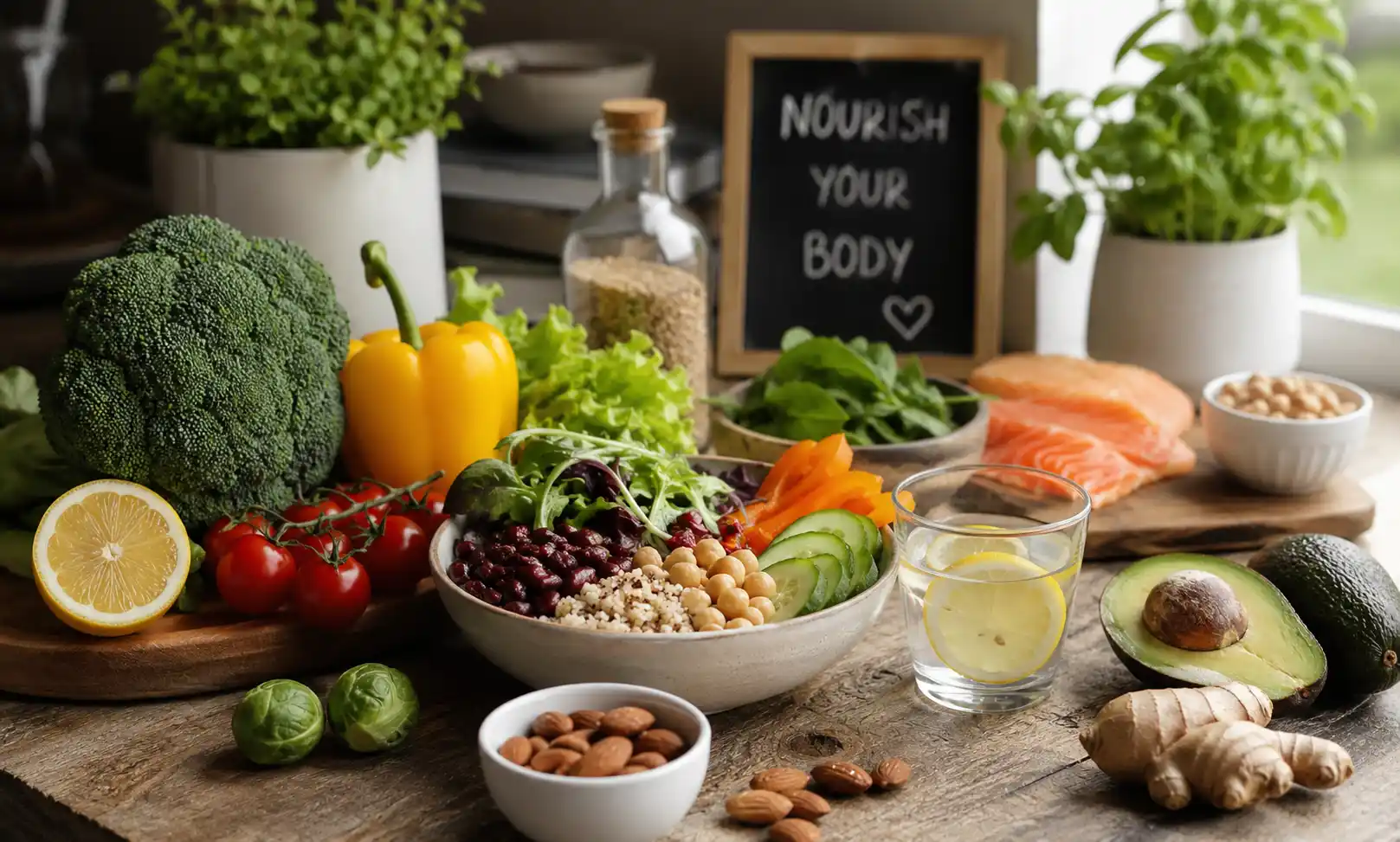
Emphasizing whole-food nutrition is one of the most crucial principles of holistic nutrition. Whole foods naturally offer a balanced combination of nutrients such as vitamins, minerals, fiber, antioxidants, healthy fats, and other beneficial compounds that synergistically promote good health. The diet of many holistic nutrition approaches is first and foremost made up of fruits, vegetables, whole grains, legumes, nuts, seeds, fish eggs, and lean meats.
Personalization is also a significant aspect. Holistic nutrition is based on the understanding that nutritional requirements differ from one individual to another. Age, genetics, level of physical activity, medical history, cultural preference, and lifestyle are only some of the factors that determine what is most suitable for an individual.
Apart from this, balance is the essence of holistic nutrition too. Even though some fad diets promote heavy restrictions, holistic nutrition is about developing lifestyles that you can stick to without the need for sacrifice. The intention is not perfect adherence but rather regularity and wellness throughout life.
Besides, holistic nutrition also considers that mental and emotional well-being play a role in physical health. Issues like chronic stress, anxiety, and insufficient sleep can have an impact on appetite, digestion, food choices, and general well-being. So, taking these factors into account can be just as significant as changing one's eating habits, if not more.
Potential Benefits of Holistic Nutrition
Holistic nutrition can bring about better overall diet quality, which is one of its most evident perks. Pointing your diet towards whole foods, away from heavily processed products, will naturally lead to increased intakes of fiber, vitamins, minerals, and different kinds of plant phytochemicals. This transition not only bolsters your general health but also lays the groundwork for strong nutrition.
Many people experience more even energy levels when they switch to a holistic diet based on its principles. Having a good nourishing meal including protein, healthy fats, and carbohydrates that aren't quickly digested gives managing blood sugar in a healthier way and energy being stable through the day a nice boost. Besides that, if such positive changes in the eating habits are coupled with having enough sleep and handling stress, then one is bound to see bigger results both in health and strength.
Digestive wellness is definitely something that holistic nutrition can improve, as its diet plan focuses on incorporating lots of fruits, vegetables, legumes, and whole grains that contain fiber to keep the digestive system running smoothly and to promote the growth of good gut bacteria. Considering that digestion is essential to the absorption of nutrients, a healthy digestive system tends to impact the whole range of aspects related to health.
Besides that, holistic nutrition can help a person stay in touch with his/her true self in a better way by offering a healthier attitude towards food. It does away with guilt, fear, or brain-busting food prohibitions and instead focuses on awareness, flexibility, and making conscious choices. This non-extremist way could enable people to maintain healthy habits that are sustainable and break the cycle of restrictive dieting.
Holistic Nutrition and Mental Wellness
The link between what we eat and our brain health or mental well-being is a topic often neglected in the discourse on nutrition. In the wake of new studies, the association between what we eat and our feelings and psychological health is becoming more obvious.
Actually, food cannot solely be relied upon, nor can it be seen as a way to prevent or cure mental health problems. Yet, changes in one's nutritional lifestyle may affect the person's mood, the ability to focus, and the overall mental condition. Healthy diets that consist mainly of vegetables, fruits, cereals, healthy fats, and proteins obtained from animals tend to supply the brain with the best nutrient mix.
In fact, holistic nutrition acknowledges that good mental health, dealing well with stress, having good social relations, and caring for oneself are equally important aspects of health. When these areas are tackled, including eating habits, one will probably come across a more balanced path to health.
Common Misconceptions About Holistic Nutrition
Some people believe holistic nutrition is not a science. Actually, it shares a lot of its basic ideas with the advice you will find in health research based on evidence. Scientists have done a lot of studies and shown that eating healthy, being physically active, sleeping well, and keeping stress under control are the main factors of a healthy lifestyle.
It is also thought by some that living on holistic nutrition means using very costly supplements and specialty products. The truth is that supplements can be good only in some cases, but holistic nutrition focuses on getting the nutrients from natural foods mostly.
Besides, many individuals think that holistic nutrition is all about denying oneself food a lot of the time. But, almost all approaches of holistic nutrition recognize and advocate the idea of having a flexible, balanced, and sustainable way of life rather than leaving one to a set of strict rules or a short-term dieting plan.
Potential Risks and Limitations
While holistic nutrition is very beneficial in many ways, a person should be careful when entering this industry. The practitioner's qualifications and training depend a lot on their location and the certification requirements of the place. For example, if one is looking for customized advice, it is advisable to pick a professional who has a recognized credential and follows evidence-based methods.
Yet another problem in the wellness industry is the spreading of misinformation. Lots of detox programs, miracle supplements, and overstated health benefits are promoted as holistic health while actually being devoid of a solid scientific basis. Because of this, customers should not blindly trust and should always check the health information they receive.
And, holistic nutrition is best used as a secondary method to healthcare rather than a substitute for medical treatment. When it comes to serious health issues, one should seek medical evaluation and get treatment from qualified medical professionals.
How to Apply Holistic Nutrition in Everyday Life
The exciting thing about holistic nutrition is that it doesn't require you to totally change your way of living. In fact, the best rewards usually come from making small and consistent changes over time. One way to improve your diet is to include more fresh and natural foods while cutting down on highly processed ones. Make sure to prepare well-rounded meals that have lots of veggies, good quality proteins, healthy fats, and carbs that have a lot of fiber.
Good habits around sleeping are very important, so try to go to bed and get up at the same time every day. Besides, quality sleep is one of the ways your body heals itself, gets its hormones in balance, works its immune system, and keeps overall good health.
Try to make things that require moving your body a habit. Actually, just walking, gardening, or cycling is enough to give you health benefits. Most importantly, try to reduce stress and make doing so a priority. Breathing meditation, journaling, yoga, and going out in nature are some of the ways that you can manage stress as well as support emotional health, apart from eating well.
Frequently Asked Questions
What is holistic nutrition in simple terms?
Holistic nutrition is an approach that goes beyond just focusing on what you eat. It pays attention to your whole life, including things like how you sleep, manage stress, keep physically active, and your emotional state.
Is holistic nutrition backed by science?
Many aspects of a holistic approach to nutrition have found support from the scientific community; a few examples are: eating a balanced diet, exercising regularly, minimizing stress, and getting sufficient rest.
Can holistic nutrition help with weight management?
Instead of promoting crash diets, holistic nutrition will help you maintain your weight in a healthy way by motivating you to live your life with good habits that can be sustained.
Is holistic nutrition the same as a diet?
No, holistic nutrition is the philosophy and way of life that embraces an integrative approach to nutrition rather than a definite diet.
Do I need supplements to follow holistic nutrition?
It is not a given. Usually, holistic nutrition emphasizes the use of whole foods for nutrient intake as much as possible.
Who can benefit from holistic nutrition?
Anyone who has reached adulthood can gain from holistic nutrition since it not only promotes a well-balanced diet and good habits for living but also fosters wellness in the long run.
Final Thoughts
Understanding what holistic nutrition entails, going beyond food only. Although nutrition is clearly a major aspect of health, other elements like sleep quality, exercise, mental state, water intake, and stress management are also instrumental in the body's operation.
Holistic nutrition offers a practical and scientifically verified model for enhancing general wellness by simultaneously targeting these interconnected elements. Instead of running after temporary fixes or dieting trends that impose limitations, it promotes ways of life that one can maintain health, be resilient, and have a good quality of life over the long run.



Comments ( 0)
Leave a Comment
No comments yet. Be the first to comment!