

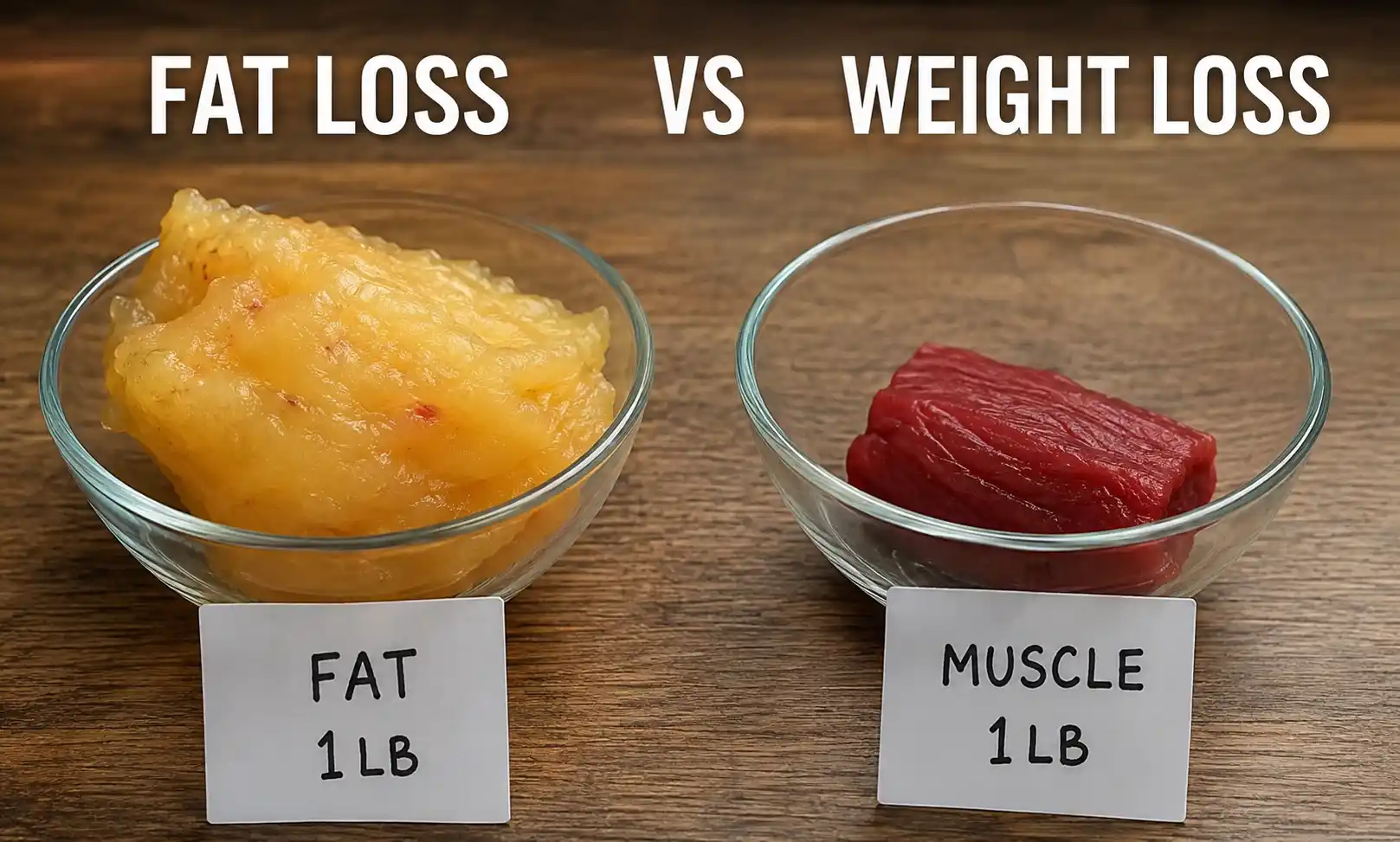
Fat loss vs. weight loss refers to two different changes in the body. Weight loss is a decrease in overall body weight, including fat, muscle, water, and other body tissues. Fat loss is, in fact, a reduction in body fat stores. Body weight alone does not reflect the extent of change in tissue type.
Table of Contents
-
What Is Fat Loss vs Weight Loss?
-
Why Scale Weight Can Change Quickly
-
What Causes Body Fat to Decrease?
-
Factors That Influence Fat and Weight Changes
-
How Body Composition Is Generally Evaluated
-
Healthy Approaches to Weight Management
-
Why Preserving Muscle Matters
-
Possible Concerns With Rapid Weight Loss
-
When Medical Evaluation May Be Appropriate
-
Myths vs Facts
-
Frequently Asked Questions
-
Conclusion
Key Takeaways
-
Changes in body fat, muscle, water, and other frame components can lead to weight loss.
-
Fat loss specifically refers to the reduction of stored body fat.
-
A lower number on the scale does not robotically indicate that the same amount of fat was lost.
-
Hydration, food intake, sodium, carbohydrates, and digestion can affect short-term scale weight.
-
Long-term fitness is better understood by looking past a scale.
Introduction
A decrease on the bathroom scale can be a strong sign of improvement. The scale, however, will not explain what was lost.
This is the major difference in understanding fat loss vs. weight loss.
Body weight is a complex number of factors such as body fat, muscle, bone, organs, water, and material in the digestive system. This means that if an individual's body fat levels have remained unchanged, their weight can still change.
It is helpful to understand that body composition is important for understanding these changes. It also helps to understand that two people can weigh the same but have different body composition, and that weight changes over time aren't always indicative of changes in body fat.
What Is Fat Loss vs Weight Loss?
Weight loss is essentially a decrease in total body weight. If a person's current weight is lower than their previous weight, they have lost weight. Still, the scale does not specify from where exactly the mass has decreased.
Weight can decrease because of changes in:
-
Body fat
-
Muscle and other lean tissue
-
Body water
-
Stored carbohydrate and associated water
-
Food and waste in the digestive tract
Fat loss, on the other hand, refers to a reduction in the level of fat in the body.
The difference is important because fat tissue serves different purposes than lean tissue. Muscle also plays a role in movement, strength, physical function, and metabolic activity. Normal physiological functions of body fat also include energy storage, insulation, and involvement in hormone-related processes.
So, you cannot use the terms "Losing Weight" and "Losing Fat" interchangeably.
Why Can Scale Weight Change So Quickly?
A common source of confusion is seeing the scale rise or fall noticeably over a short period.
Body Water Can Shift
There is a lot of water in the human body. Thus, fluid changes may cause variations in scale measurements that do not equate to the same body fat change.
The fluid balance can change with food and fluid intake, physical activity, environmental factors, sodium intake, and normal biological processes.
Stored Carbohydrate Is Linked With Water
Carbohydrates are stored as glycogen in the body, especially in the liver and muscles. Water is related to glycogen storage.
Any fluctuations in food intake or physical activity will affect glycogen stores and water bound with them. This is part of why a drop in scale weight isn't always a drop in fat.
Digestion Adds Temporary Weight
Food and beverages have physical mass. They stay on the scale until they are digested, absorbed, and excreted.
Therefore, a person's weight may vary from one day to the next or from one time of day to another due to food and fluid intake.
The bottom line is that short-term changes in weight and body fat do not necessarily occur simultaneously.
What Causes Body Fat to Decrease?
Fat stored in the body serves, to some extent, as a source of energy.
If the body continues to require more energy than it is getting from food and drink, it can tap into stored energy. This energy deficit can lead to weight loss and fat loss over the long term.
But metabolism is not that simple for humans as it is for a calorie-a-day equation. Weight regulation is impacted by body size, genetic make-up, age, activity, sleep, environment, health, and other biological factors.
Other factors, such as lifestyle choices, sleep patterns, medications, health, family history, genes, and living and working environments, can affect body weight, according to the National Institute of Diabetes and Digestive and Kidney Diseases (NIDDK).
The complexity is part of the reason for the wide variance in fat loss from person to person.
What Factors Influence Fat Loss and Weight Loss?
Eating Patterns
Energy is a quality humans need, obtained from food, and food also supplies protein, carbohydrates, fats, vitamins, minerals, fiber, and other compounds.
Alterations in the total amount of food and drink consumed may affect energy balance and ultimately body weight over the long-term. Nutritional quality and sustainability of an eating pattern also impact overall health.
Physical Activity
It's not just about the weight loss; people benefit from physical activity in so many other ways that require more energy.
Exercise promotes cardiovascular function, physical activity, well-being, sleep, bone health, and muscle function. Federally recommended physical activity goals for adults are 150-300 minutes per week of moderate-intensity aerobic exercise for maximum health benefits, plus muscle-strengthening exercises on 2 days a week.
Notably, there can be health benefits from physical activity even with relatively small changes in their scale weight.
Muscle Mass
Muscle is part of lean body mass. Weight loss can result in alterations in both fat and lean body mass.
Resistance or strengthening exercises will be particularly appropriate for maintaining muscle function. According to NIDDK, weight-bearing exercises could be beneficial for preserving muscle mass in older adults or for losing weight.
Sleep and Stress
Weight loss and gain are not separate from the body.
Appetite, activity, eating habits, and health can be interwoven with sleep and stress. Sleep and stress management are lifestyle factors for long-term weight management and are included in NIDDK.
Genetics and Health
Genetics can affect body size, appetite regulation, metabolism, and fat storage.
Other health problems and drugs can also impact a person's body weight. One reason weight changes sometimes can't be attributed to diet and exercise.
How Is Body Composition Generally Evaluated?
A bathroom scale measures your weight, not your body composition.
In healthcare and research settings, a number of measurements can be employed depending on the purpose of the evaluation.
Body Mass Index
BMI (body mass index) is a ratio of weight to height. It can be one of the screening tools for health evaluation regarding weight-related health issues.
BMI, however, does not directly measure body fat; it doesn't distinguish between muscle mass and fat mass.
Waist Measurement
A waist measurement may provide more information about the distribution of abdominal fat. Too much belly fat is linked to a higher risk of some health issues.
Body-Composition Measurements
There are several other methods for measuring fat mass and lean mass. These include bioelectrical impedance devices, skinfold measurements, and imaging devices (especially used settings).
Both methods have their drawbacks. Some measures can be influenced by hydration, equipment, technique, and more; any one number reflects overall health.
What Does a Healthy Approach to Weight Management Look Like?
Long-term load management often focuses on sustainable behaviors rather than forcing the fastest feasible choice across dimensions.
Nutrient-Dense Eating Patterns
Diets focused on naturally nourishing foods can support overall well-being while helping one control energy intake effectively.
Usual dietary items may include vegetables, fruits, whole grains, protein-rich meals, and other naturally processed foods consumed as part of an overall balanced eating pattern.
Regular Physical Activity
Getting movement has health benefits even without losing weight dramatically.
Aerobic exercise improves the heart and lungs, as well as muscle strength, which improves muscles and bones. NIDDK says that the health advantages linked to regular exercise are apart from its weight-reduction effect.
Sustainable Habits
Very short-term approaches can be really hard to keep up with.
Most research-backed weight-loss programs are more about setting realistic goals with balanced nutrition, physical activity, behavior change, progress tracking, and long-term support than about quick-fix promises.
Why Does Preserving Muscle Matter During Weight Loss?
A scale reading going down may look nice, but the kind of tissue lost is a bigger issue. Strong muscles are needed for simple tasks we do every day, such as walking, lifting, using stairs, maintaining balance, and performing physical labor.
Maintaining muscle strength is important as we age because muscle mass naturally decreases. Physical exercises to strengthen bones and muscles are good for muscles and bones overall and could help maintain muscle mass when overall weight is decreasing.
That is another reason the fat-loss-to-weight-loss ratio is a better measure than the number of pounds lost alone.
What Are Possible Concerns With Rapid Weight Loss?
The scale alone should not be trusted to indicate fat loss, as weight gain or loss is not linear and can fluctuate for various reasons. A significant reduction in weight may come from loss of water, lean tissue, and body fat. Strict eating plans can sometimes make it challenging to have proper nutrition. This is true of people who follow highly restrictive eating styles also. If someone follows such eating patterns, it might lead to a deficiency in essential nutrients.
We should be very cautious of programs that promise significant weight loss in a short period, as they are unlikely to be real. Achieving weight loss is the result of a lifestyle and habit change that has been a long battle to get there. It has been a combination of science-based dietary habits, consistent physical activity, behavioral support, and maintenance strategies, as defined by NIDDK for successful weight loss programs, that has contributed significantly to sustained weight loss.
When May Medical Evaluation Be Appropriate?
Body weight fluctuations occasionally occur without being related to deliberate fat loss through dieting or exercise, e.g., due to illness or hormonal issues.
Medical personnel should investigate whether there has been unexplained, persistent, and significant weight loss, or whether these weight changes occur as part of a set of symptoms or health-related changes.
Diagnostic procedures may involve taking your medical history, analyzing your dietary habits & activity levels, reviewing your medications, conducting a thorough physical examination, and ordering additional tests as medically required.
In reality, various physiological and pathophysiological processes can cause changes in one's weight. A professional assessment will provide the necessary support to identify the source of any weight alteration outside the normal range.
Fat Loss vs Weight Loss: Myths vs Facts
| Myth | Fact |
| Every pound lost is body fat. |
Weight loss may reflect changes in fat, muscle, water, glycogen-related water, and digestive contents. |
| A lower scale number always means better health. |
Body weight is only one health measure and does not describe fitness, body composition, or overall health on its own. |
| Daily weight gain means daily fat gain. |
Short-term fluctuations commonly reflect water, food intake, digestion, and other temporary factors. |
| Exercise only matters if it causes weight loss. |
Physical activity provides cardiovascular, metabolic, muscular, bone, sleep, and other health benefits independent of major weight change. |
| Faster weight loss is always better. |
Sustainable, evidence-based weight management generally emphasizes realistic, maintainable changes rather than extreme short-term results. |
Frequently Asked Questions
Is fat loss better than weight loss?
Actually, they talk about different outcomes, not two different types of treatment. Weight loss refers to a decrease in total body mass, whereas fat loss refers to a decrease in body fat only. For example, if a person loses 5 kg of fat but gains 2.5 kg of muscle at the same time, their body weight may change little or not at all. But if someone loses mainly fat with negligible or no muscular gain, their body weight will probably go down. Really. So, scale weight alone may not accurately reflect all bodily changes.
Can I lose fat without losing much weight?
Body composition can change considerably without total body weight being affected. That is, if the amount of fat mass or lean tissue changes, the scale may show a partial balance. And water fluctuations can also conceal short-term changes. For that reason, body weight is not an accurate gauge of changes in body fat.
Why am I losing weight so quickly at first?
Initially, a change in scale weight can be due in part to body water, water bound to glycogen, and digestive contents, as well as to changes in body fat alone. Dieting can affect these elements quite fast. The intensity and underlying reasons can differ from one person to another, so small-scale variations shouldn't be seen as solely fat weight loss.
Does sweating mean that body fat is being burned?
When it gets hotter, the human body sweats to cool itself. Sweating can reduce body weight, but the effect is very short-lived. Rehydration will get that weight back up. Exercise increases energy usage over time. Yet the quantity of perspiration is not an indicator of body fat loss.
Is body weight enough to measure health progress?
A single measurement cannot summarize someone's total condition. For example, weight is a fairly good indicator of health to some degree, yet there are many other health indicators that medical practitioners can assess, such as waist size, blood pressure, lab data, physical ability, previous medical conditions, sleep quality, and daily movement. Whether or not a particular health measure is relevant will always be individual-specific.
Conclusion
The distinction between fat loss and weight loss changes how one views the bathroom scale. When talking about weight loss, it refers to a loss of overall body mass, whereas fat loss specifically refers to a reduction in body fat.
Scale weight can be affected by various factors, such as water in the muscle, digestion-related water, and other factors. For this reason, the pounds that we see after some time are only part of the story.
Healthy long-term living is much more than reaching a certain weight. And a well-balanced diet, regular exercise, taking care of your muscles, sleeping adequately, and developing healthy habits that will last—all of these lead to better health. In cases of unexplained weight loss coupled with symptoms of ill health, only qualified medical practitioners can review the patient's full medical history to assess the case.
Disclaimer: Only as an educational and informational guide, this article must not be used as any sort of medical advice, but rather is not meant to replace in any way a professional medical examination, diagnosis, or therapy.




Comments ( 0)
Leave a Comment
No comments yet. Be the first to comment!