

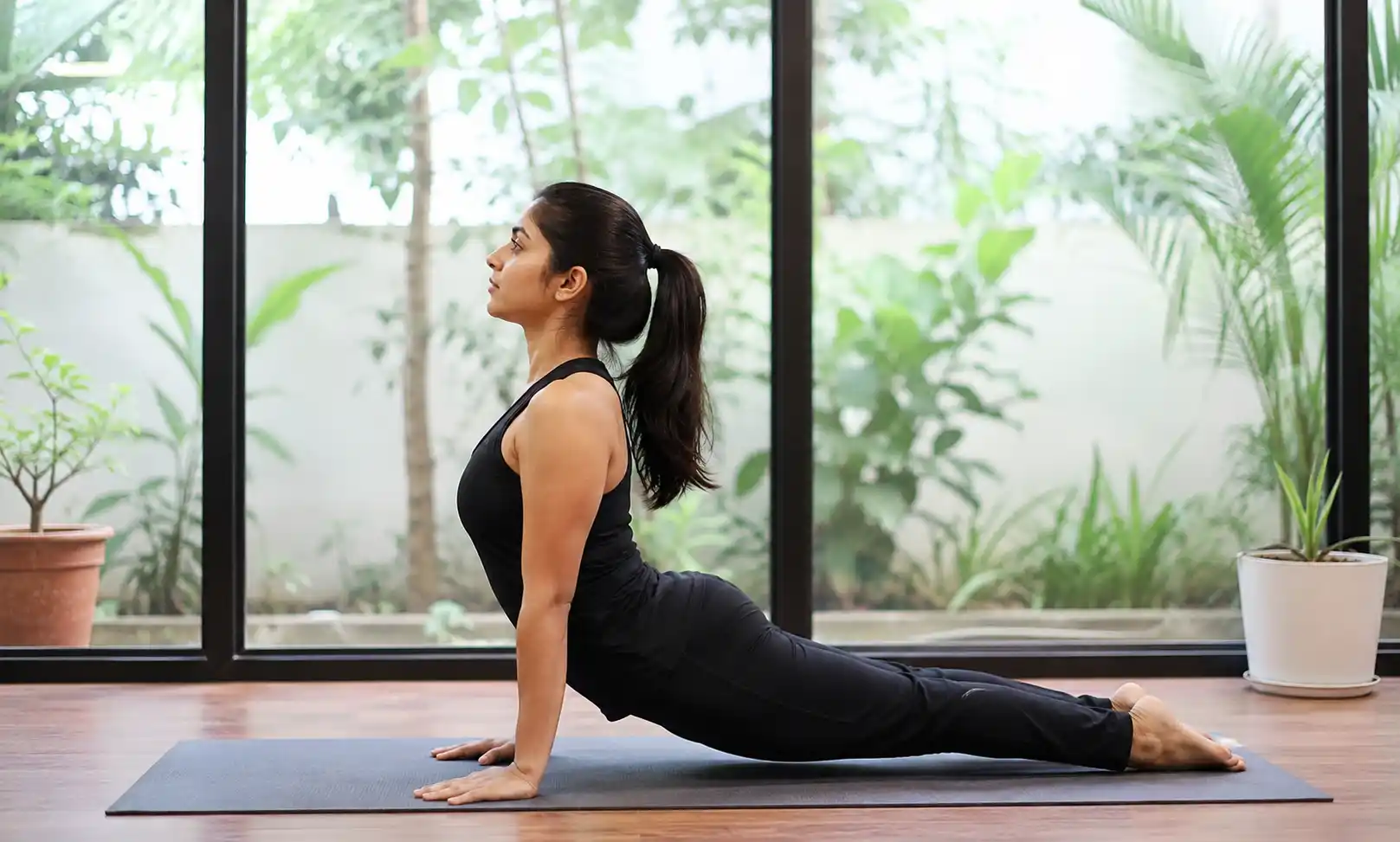
Yoga is one of the most effective ways to improve physical health, increase flexibility, maintain balance, and improve mental health. Those who have practiced yoga through the ages have done so to stay fit, live healthy, and get a better connection between the body and mind.
Whereas regular workout routines only concentrate on body movement, yoga integrates postures, breath, and mindfulness together. Such a special blend can not only calm stress, but it can also increase your flexibility, get your muscles stronger, and give you health benefits in general.
In this era when everything moves so fast, many of us have poor posture, stiff muscles, inactivity, and stress from everyday life. Yoga is a great, simple, and easy way for all of you that can be adjusted to different ages and fitness levels.
Either you have no idea what yoga is, or you want to make your yoga better, these seven poses are a great start.
A Quick Note About Yoga and Health
Yoga is widely recognized as a beneficial wellness activity that can help enhance one's flexibility, balance, strength, relaxation, and general quality of life. Yet, yoga is not meant to diagnose, treat, cure, or prevent any disease.
In case you have a chronic health condition injury severe back pain, or limited mobility, speak with a certified medical professional before starting a new fitness plan.
Why Breathing Matters in Yoga
Breathing is one of the most crucial components of yoga. Each movement is designed for portraits with slow, managed breathing patterns.
Proper breathing may help:
-
Improve concentration
-
Support relaxation
-
Reduce stress
-
Increase oxygen delivery to muscles
-
Enhance mindfulness
An easy rule for beginners is to breathe when setting up the action and exhale during the folding or relaxation action.
1. Mountain Pose (Tadasana)
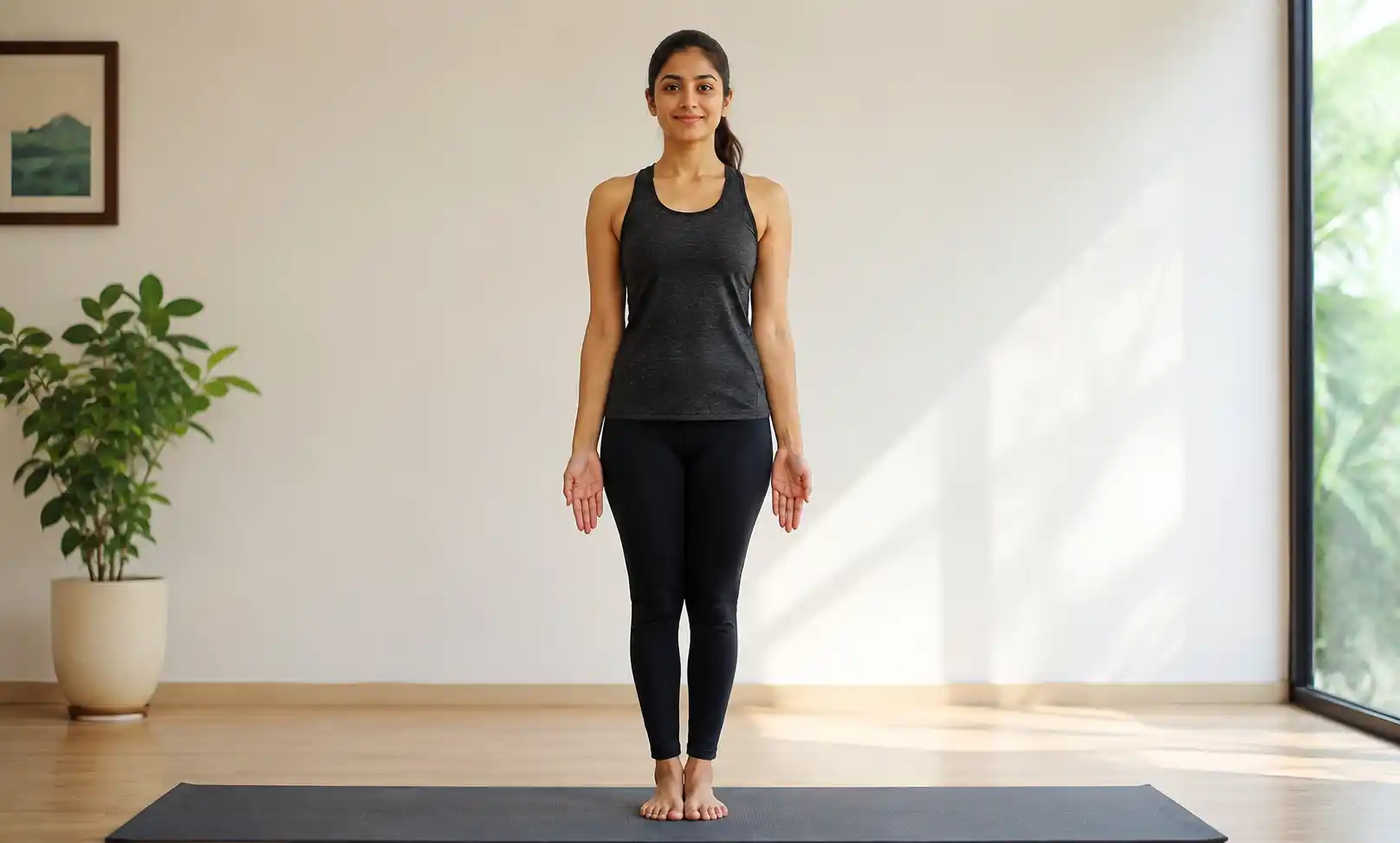
Benefits of Mountain Pose
Mountain Pose is frequently viewed as the basic posture of yoga, as it shows the right way of posturing and aligning the body. A lot of people end up with postural problems due to prolonged sitting, staring at screens, or other sedentary activities.
With constant practice, it can be very helpful in improving posture, toning the leg muscles, enhancing the awareness of one's own body, and even aiding better balance. Besides, it is a very effective way of teaching the body to remain in proper alignment during daily activities.
Meanwhile, the truth is it is very straightforward but involves fundamental yoga values, making Mountain Pose one of the best options for first-timers.
How to Do It
-
Stand tall with feet together.
-
Relax your shoulders.
-
Keep your spine straight.
-
Engage your core muscles.
-
Let your arms rest naturally at your sides.
Breathing Technique
Inhale deeply through your nose and exhale slowly while maintaining the posture.
2. Child's Pose (Balasana)
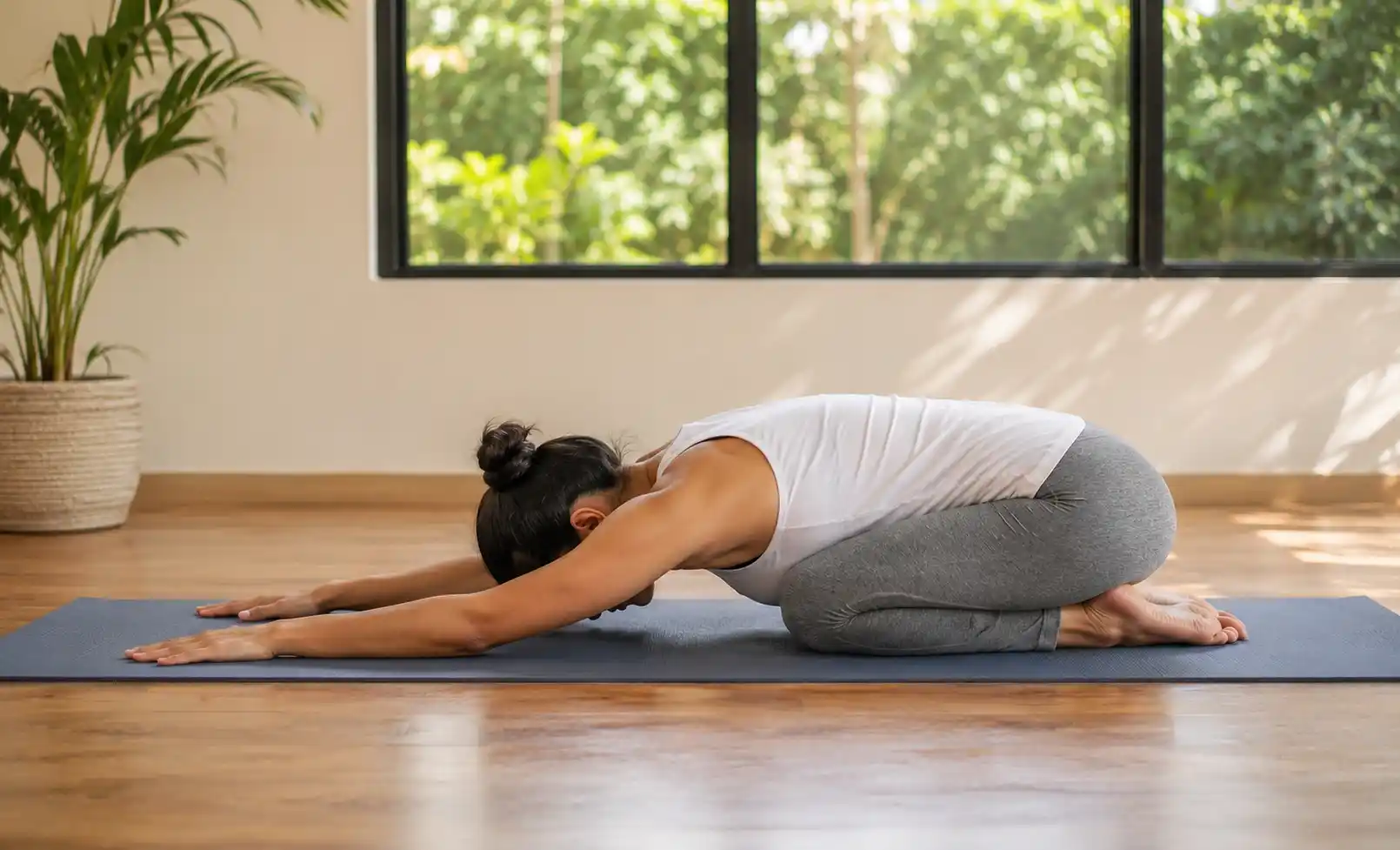
Benefits of Child's Pose
Child's Pose is considered among the most soothing yoga poses. It offers a mild stretch for the hips, thighs, ankles, and lower back while promoting deep breath and a state of quietness.
This posture can be a good mental fatigue reliever and stress management tool. It could also lead to the development of mindfulness as a side effect. That is why many yoga lovers resort to Child's Pose for catching their breath after more demanding postures, as it has the ability to make them feel calm and at ease.
A very light stretching movement, together with a calm breathing rhythm, is just what the doctor ordered for those who want to relax and de-stress after a hectic day.
How to Do It
-
Kneel on the floor.
-
Sit back on your heels.
-
Extend your arms forward.
-
Rest your forehead on the mat.
-
Relax your body completely.
Breathing Technique
Take successive breaths through your nose and focus on releasing tension with each exhale.
3. Downward Facing Dog (Adho Mukha Svanasana)
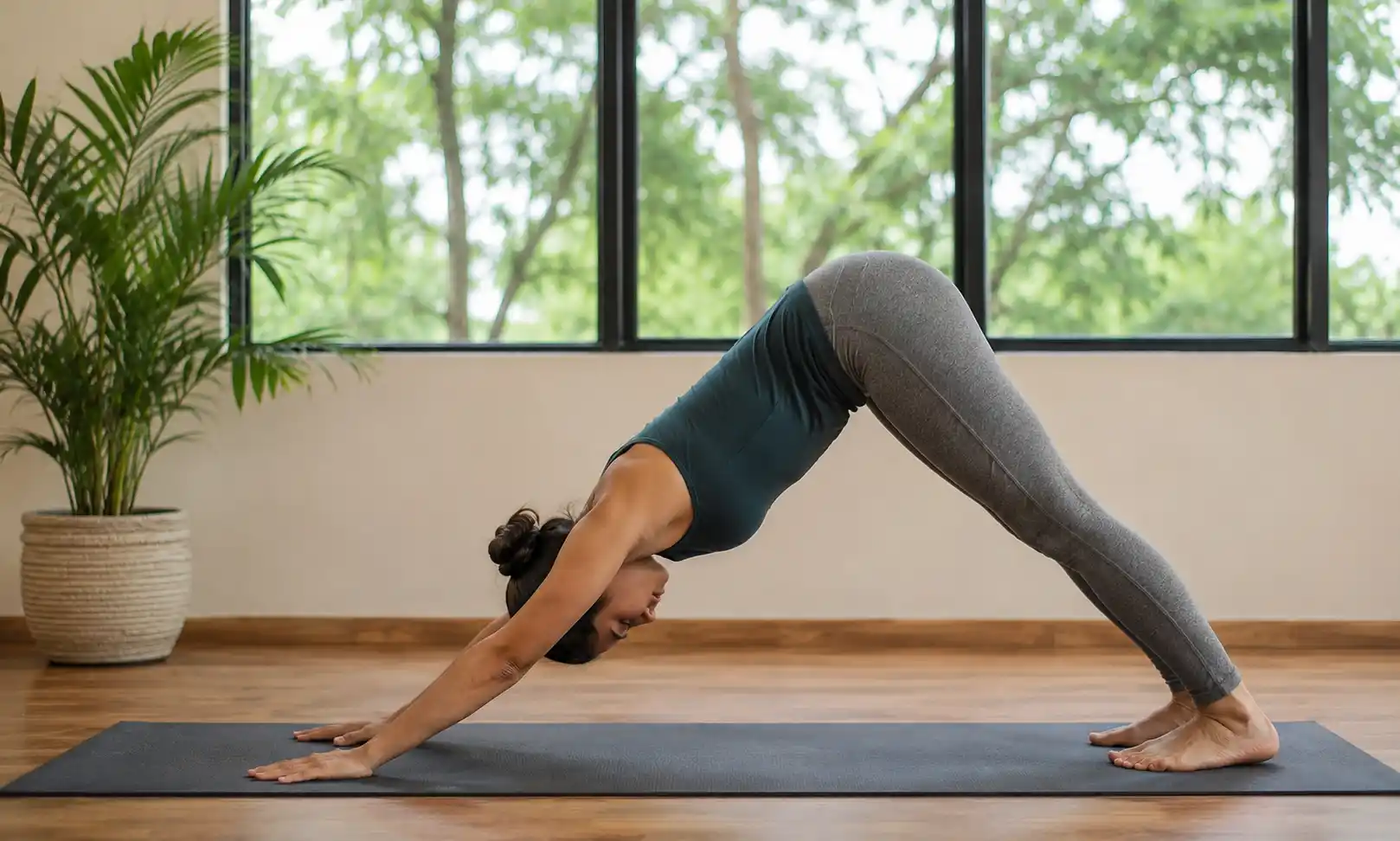
Benefits of Downward-Facing Dog
This is probably the world's most recognizable yoga pose. It works on stretching almost the entire back side of the body, including the hamstrings, calves, shoulders, and also the spine. Also, it builds up the arms and the upper body.
Those who are sitting for hours will easily get tight muscles and become less flexible. Downward Facing Dog might be the way to go to loosen up, increase the blood flow, and get rid of the whole body stiffness.
This pose is a very usual practice piece, as it can do strengthening and stretching simultaneously.
How to Do It
-
Begin on hands and knees.
-
Lift your hips toward the ceiling.
-
Straighten your legs comfortably.
-
Keep your back long and straight.
-
Press your heels gently toward the floor.
Breathing Technique
Maintain slow and regular breathing while lengthening your spine.
4. Cobra Pose (Bhujangasana)
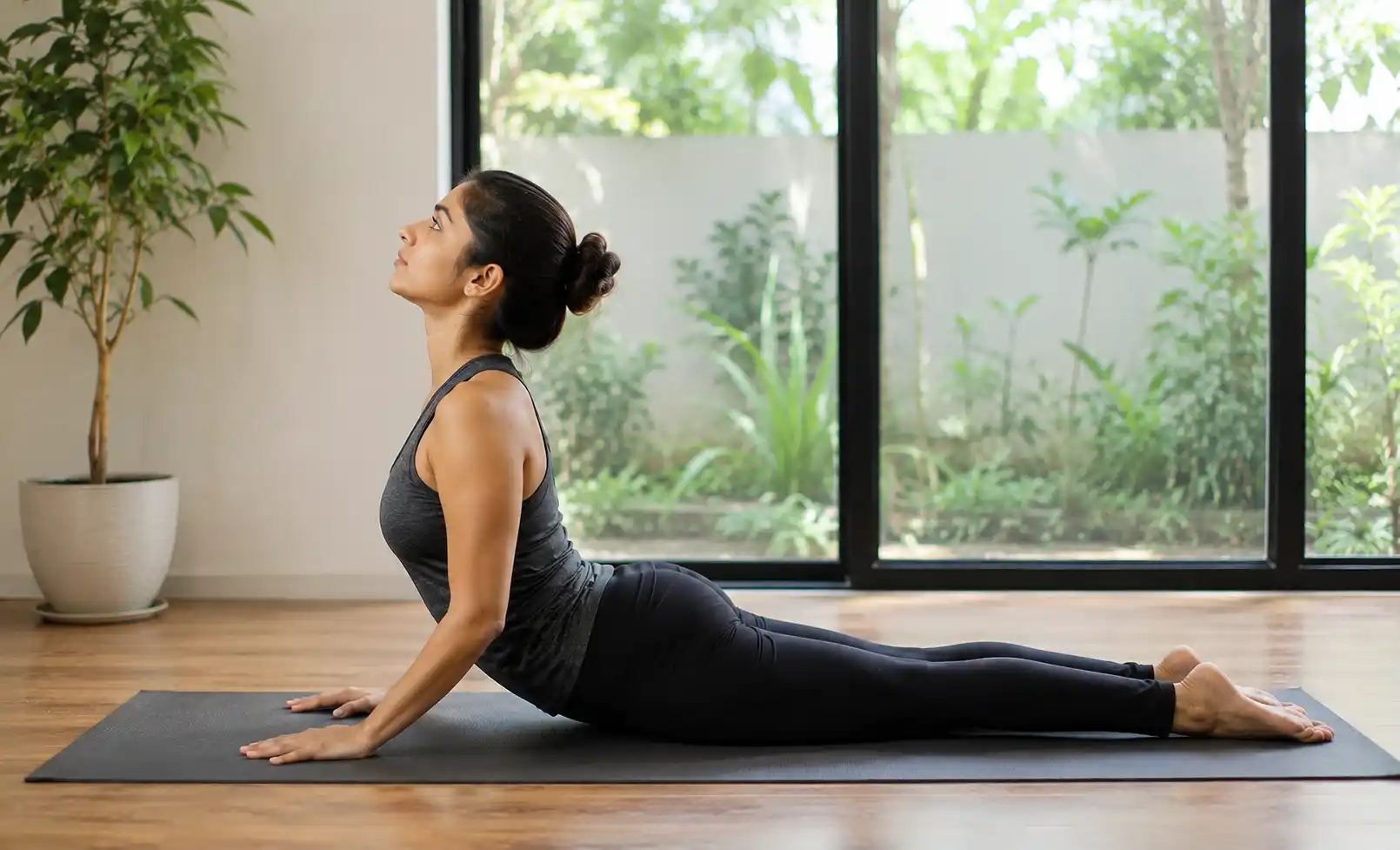
Benefits of Cobra Pose
Cobra is a great stretch for people who sit or work on computers for long periods of time. Besides opening the chest, it also helps to make the back muscles stronger.
If you regularly practice this pose, it may help to correct your posture, maintain the flexibility of your spine, and alleviate the feeling of upper back and shoulder stiffness. The mild backbend also promotes movement and may work as a remedy for a dull sit.
One reason why many newbies like Cobra is that they can always make it easier or harder to suit their level of flexibility.
How to Do It
-
Lie face down on the floor.
-
Place your hands beneath your shoulders.
-
Slowly lift your chest upward.
-
Keep your elbows slightly bent.
-
Avoid straining your neck.
Breathing Technique
Exhale as you lift your chest and exhale slowly while maintaining the posture.
5. Warrior I Pose (Virabhadrasana I)
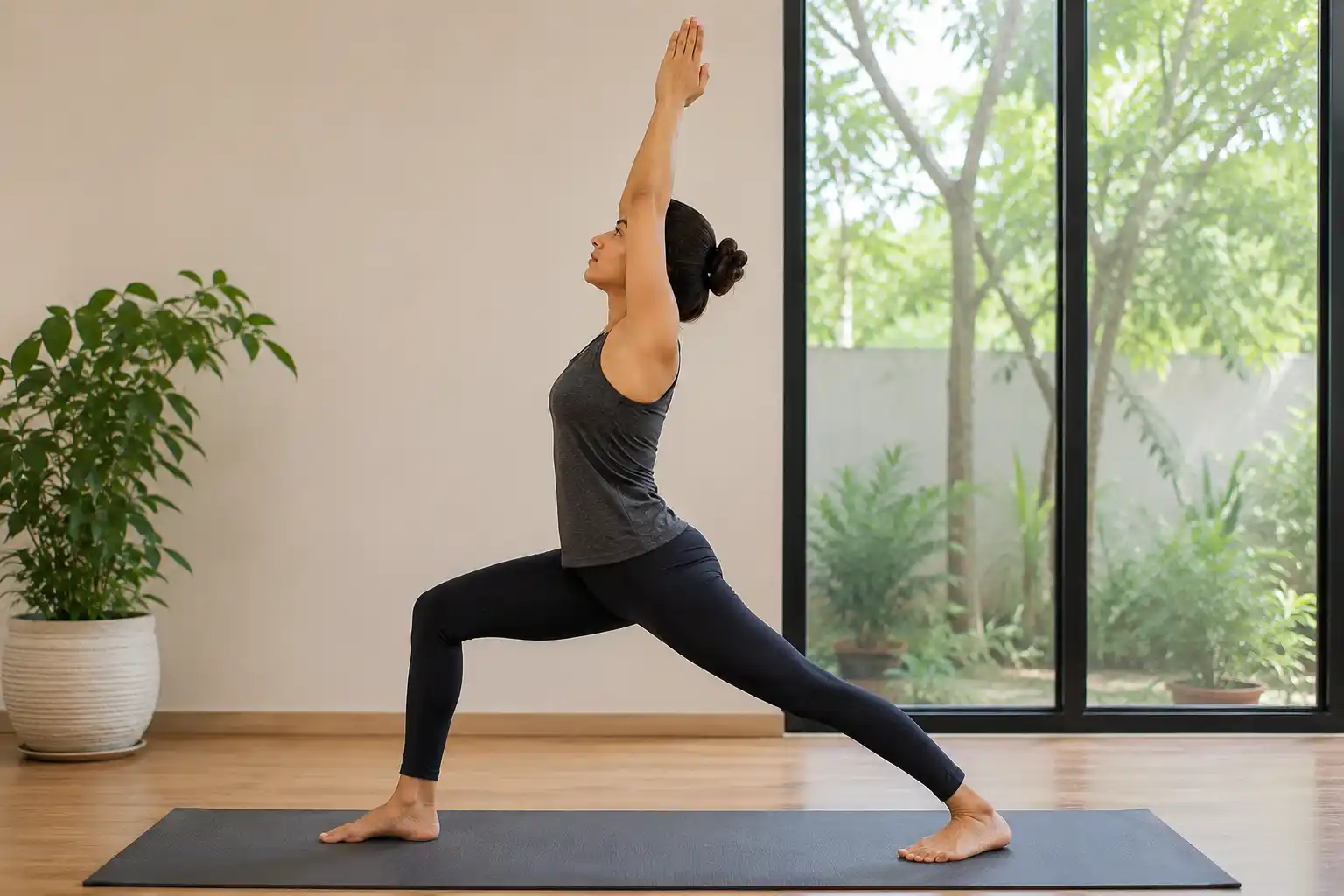
Benefits of Warrior I Pose
Warrior I is a strong standing pose that helps develop strength and stability. It activates the leg muscles, hip muscles, the core, and even the shoulders. In addition, it helps to improve one's balance and focus.
Keeping up a steady practice of this pose can contribute to a stronger lower body, better mobility, and an overall improved posture. Also, it is a great pose for training one's concentration since it demands unceasing focus and control to stay balanced while holding the position.
Yoga sequences that carry the intention of building up stamina and body awareness get quite a lot of usage of this pose.
How to Do It
-
Step one foot forward.
-
Bend the front knee.
-
Raise your arms overhead.
-
Keep your chest lifted.
-
Hold comfortably.
Breathing Technique
Alternately inhale and maintain a steady breath in all poses.
6. Tree Pose (Vrikshasana)
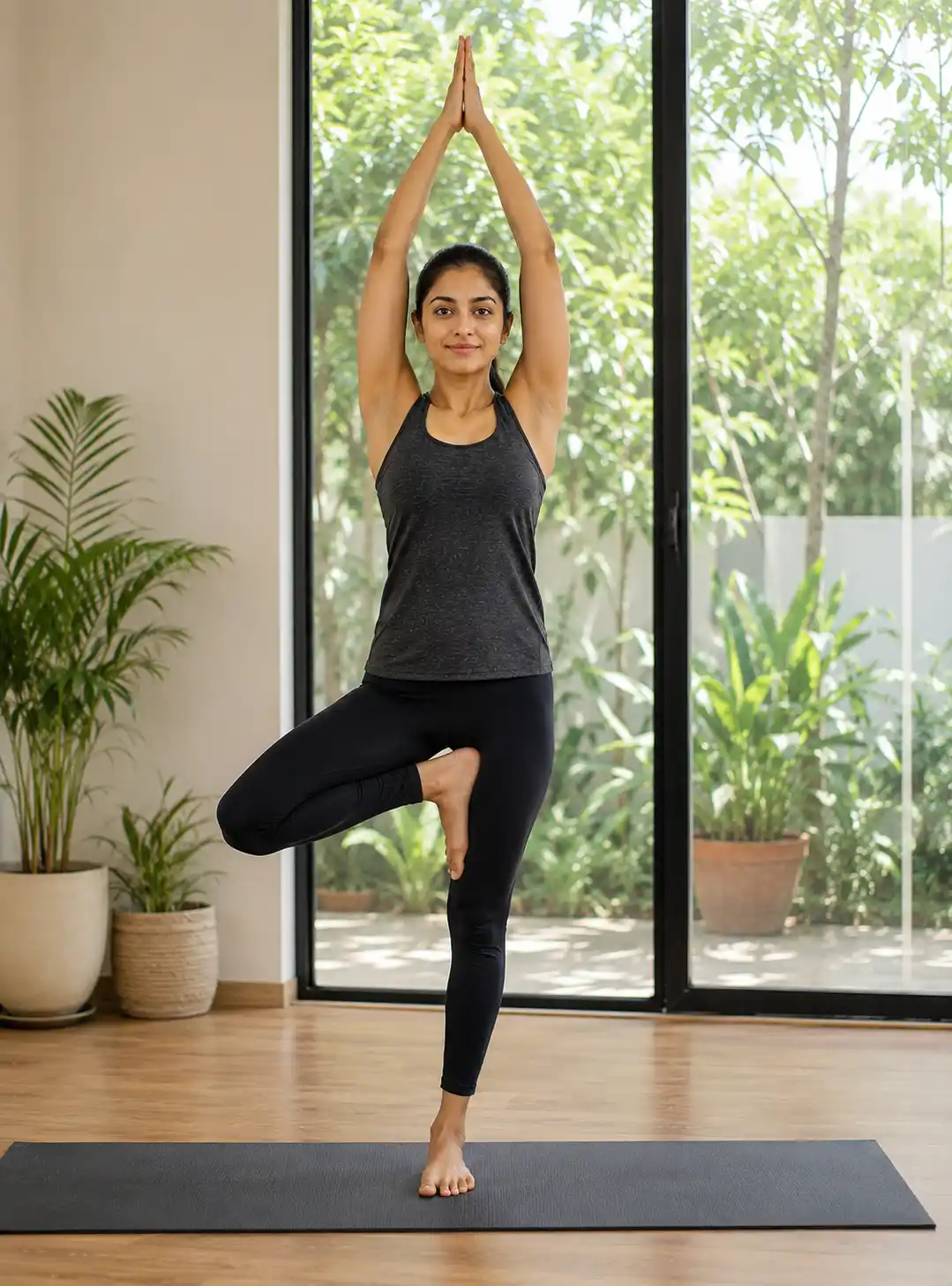
Benefits of Tree Pose
Tree Pose is an excellent yoga pose for working on balance and concentration. Besides strengthening the legs and core, it also enhances body awareness.
It is perfect for coordination and focus as it calls for a lot of balance. Besides that, many people enjoy the mindfulness that stems from being balanced. Doing this frequently can be helpful with posture, confidence, and general stability.
How to Do It
-
Stand on one foot.
-
Place the opposite foot against your inner thigh.
-
Bring your palms together.
-
Focus on a fixed point.
-
Hold for several breaths.
Breathing Technique
Use slow, controlled breathing to help maintain stability.
7. Corpse Pose (Savasana)
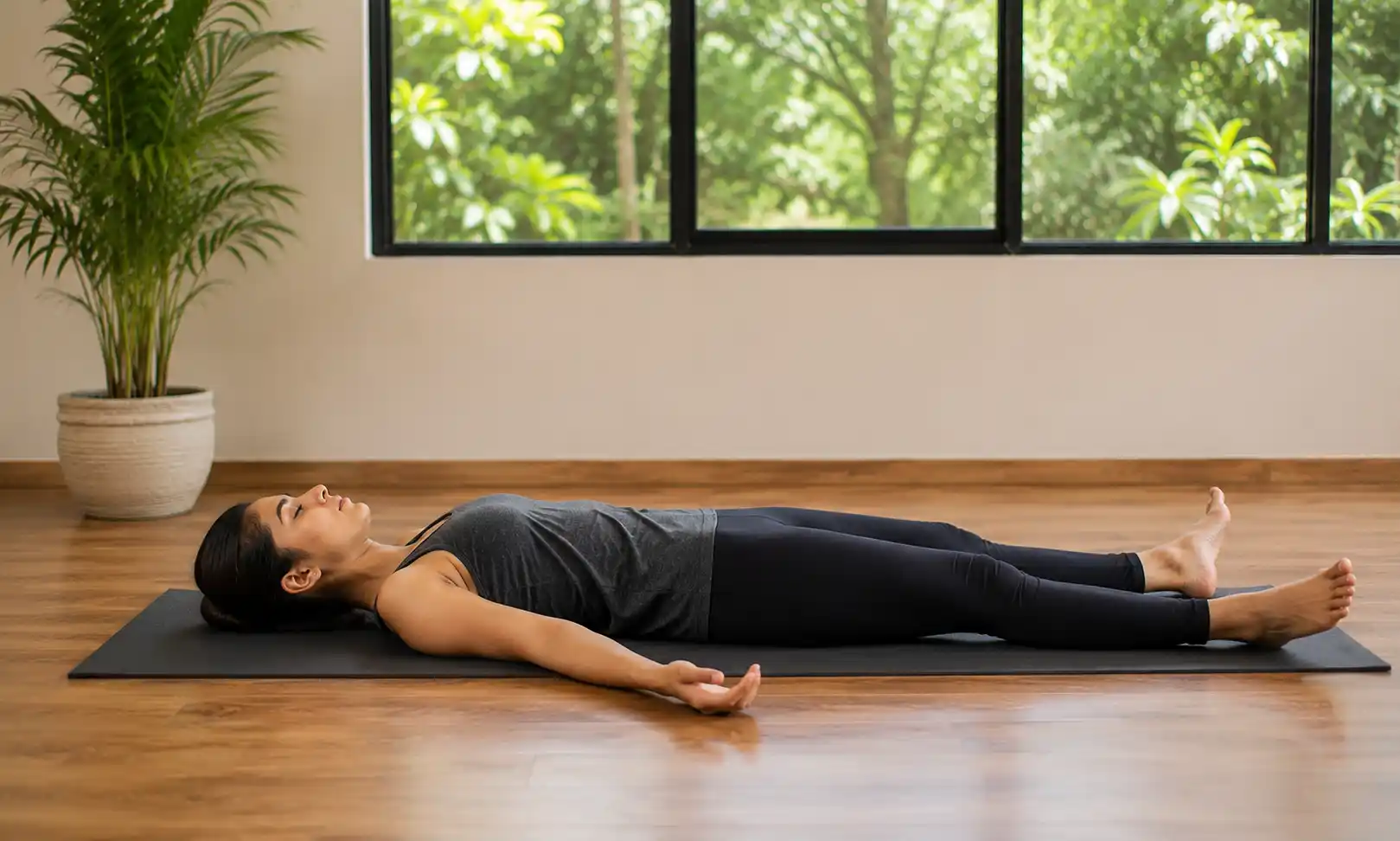
Benefits of Corpse Pose
Although it looks like a simple pose, Savasana is regarded as one of the most essential yoga poses. It gives the body and mind a chance to unwind entirely after doing physical exercise.
This posture could be useful in lessening stress, facilitating relaxation, aiding recovery, and leading to being mindful. Numerous yoga practitioners acknowledge feelings of re-energization and mental clarity after immersing in Savasana for a few minutes.
Conventionally, it is done at the conclusion of a yoga class to experience the after-effects of the workout.
How to Do It
-
Lie flat on your back.
-
Relax your arms and legs.
-
Close your eyes.
-
Allow your body to become completely still.
Breathing Technique
Let your breathing gradually emerge naturally and effortlessly.
Safety Tips for Practicing Yoga
-
Never force a stretch.
-
Focus on controlled breathing.
-
Stop immediately if you feel pain.
-
Practice on a stable surface.
-
Use props when necessary.
-
Prioritize proper form over flexibility.
Frequently Asked Questions (FAQ)
Which yoga pose is best for beginners?
Mountain seals and children's seals are exceptional choices because they are easy to test, safe, and smooth.
How often should I practice yoga?
Most novices benefit from practicing yoga 3 to 5 times per week. Consistency is usually more necessary than long-term.
Can yoga help reduce stress?
Many yoga poses combined with managed breathing can additionally guide relaxation and help manage day-to-day stress.
Is yoga suitable for older adults?
Yes. Yoga should be customized to specific ages and health ranges, making it available to plenty of people.
Do I need special equipment for yoga?
While yoga mats are useful, many beginner poses require little or no equipment.
Conclusion
Yoga is not just a workout; it is a holistic approach to health and well-being that incorporates movement, breathing, and meditation. This pose guide features seven yoga postures to help you work toward flexibility, balance, posture, strength, and relaxation.
With consistent practice and a focus on proper breathing and technique, you will soon reap the benefits of yoga and sustain a healthier, more balanced way of life.
Comments ( 0)
Leave a Comment
No comments yet. Be the first to comment!