
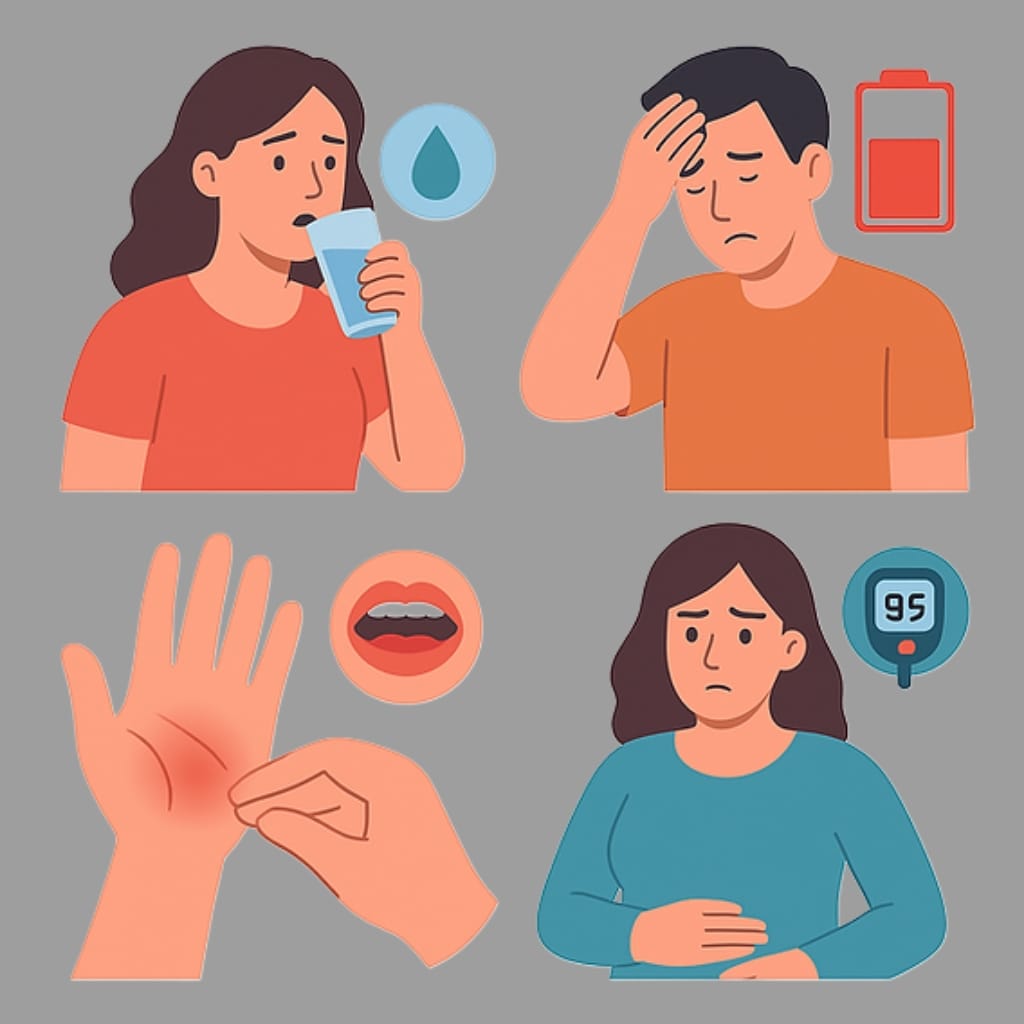
Early indicators of diabetes, particularly type 2 diabetes, may include unusual fatigue, excessive thirst, or abrupt changes in appetite or weight. Before realising that their body is indicating a problem, many people endure these symptoms for months or even years. Early detection of these symptoms can lead to prompt medical evaluation and improved health management. Keeping an eye out for changes in your body is essential because diabetes symptoms frequently appear gradually.
What Are the Earliest Signs of Diabetes and Why Do They Matter?
Since many early diabetes symptoms appear gradually, they may go unnoticed. Elevated blood glucose levels are the result of the body’s inability to use insulin efficiently, which leads to type 2 diabetes. Early symptom detection allows for prompt medical assessment and improved condition management.
Common Signs of Diabetes People Usually Ignore
These are typical signs of elevated blood sugar. These descriptions should not be used for self-diagnosis; they are meant only for awareness.
1. Constant Thirst and Dry Mouth
Feeling thirsty even after drinking water may indicate rising blood glucose levels. When blood sugar is high, the body tries to eliminate the excess sugar through increased urination, which can lead to dehydration and persistent thirst.
2. Frequent Urination, Especially at Night
Increased urination is one of the most prevalent symptoms of diabetes. The kidneys have to work harder to filter out glucose when it accumulates in the blood, which leads to more frequent trips to the loo.
3. Unexplained Fatigue and Low Energy
Many people believe that a busy lifestyle is the cause of exhaustion, but fatigue can become unexplained and persistent when cells are unable to use glucose for energy.
4. Sudden Weight Gain or Weight Loss
While some people may notice unexpected weight gain, others may experience abrupt, inexplicable weight loss. The body struggles to transform sugar into usable energy, which is why this happens.
5. Blurry Vision
The eye’s lens may swell as a result of high blood sugar, temporarily impairing vision. Repeatedly experiencing this could indicate that a blood sugar check is necessary.
Skin and Physical Changes Linked to Type 2 Diabetes
Dark Patches on the Neck or Underarms
Insulin resistance may be indicated by a thick, velvety skin texture, particularly in body folds.
Slow-Healing Wounds
Changes in circulation and immune response brought on by elevated blood glucose levels may cause cuts, bruises, or infections that heal more slowly.
Frequent Infections
Blood glucose levels that are persistently high can occasionally lead to recurrent gum infections, yeast infections, or urinary tract infections.
Emotional and Cognitive Clues
Diabetes can have an impact on mood and mental clarity in addition to physical health, which can result in irritability, anxiety, or trouble focusing.
Brain Fog
Changes in blood glucose can impact the brain’s energy supply, which can lead to mental exhaustion or difficulty focusing.
Irritability or Mood Swings
Everyday stress can become more intense and difficult to handle when blood sugar levels are high or unstable.
Why These Signs of Diabetes Matter for Type 2 Diabetes Awareness
The nervous, cardiovascular, and immune systems are just a few of the bodily systems that can be impacted by uncontrolled high blood sugar, which also raises the risk of complications over time. Effective health management is made possible by early detection, which allows for timely advice from medical professionals, lifestyle modifications, and the right kind of support.
Risk Factors That Increase the Chances of Type 2 Diabetes
These variables may raise the risk, particularly when paired with early symptoms, but they do not prove diabetes:
- A sedentary way of living
- Diabetes in the family history
- Low endurance or chronic fatigue
- Sleep problems like sleep apnea or snoring
- A diet heavy in carbohydrates or erratic eating habits
- Age over 40 (although younger adults are increasingly developing type 2 diabetes)
When Should Someone Get Tested?
If you frequently encounter any of the following symptoms, think about consulting a qualified healthcare professional:
- Overwhelming thirst
- Urinating a lot
- Persistent blurriness of vision
- Severe exhaustion
Diabetes can only be diagnosed by a trained healthcare professional, although tests like fasting glucose and A1C are frequently used for medical evaluation.
FAQs: Signs of Diabetes & Type 2 Diabetes
Q1: Are signs of diabetes reversible if caught early?
With professional advice, lifestyle changes, and routine monitoring, early metabolic changes can frequently be improved. But only a medical professional can properly evaluate each patient’s health needs and offer the right treatment.
Q2: Can young adults show signs of type 2 diabetes?
Indeed, it is becoming more common in younger people and is frequently caused by genetics, stress, and lifestyle choices.
Q3: Is thirst always a sign of diabetes?
Not always. Numerous factors can contribute to thirst. When it coexists with other symptoms like fatigue or frequent urination, it is more worrisome.
Q4: Can type 2 diabetes develop without obvious symptoms?
Indeed, that is accurate. Awareness and routine health examinations are crucial because some people may not show any symptoms until their levels are noticeably elevated.
Q5: Should someone self-diagnose based on symptoms?
No. A diagnosis cannot be confirmed by symptoms, but they may indicate a possibility. The required tests and precise advice can only be carried out by a healthcare professional.